By Seyla Benhabib
Professor Emerita Yale University, Senior Fellow, Columbia Center for Contemporary Critical Theory, Columbia Law School
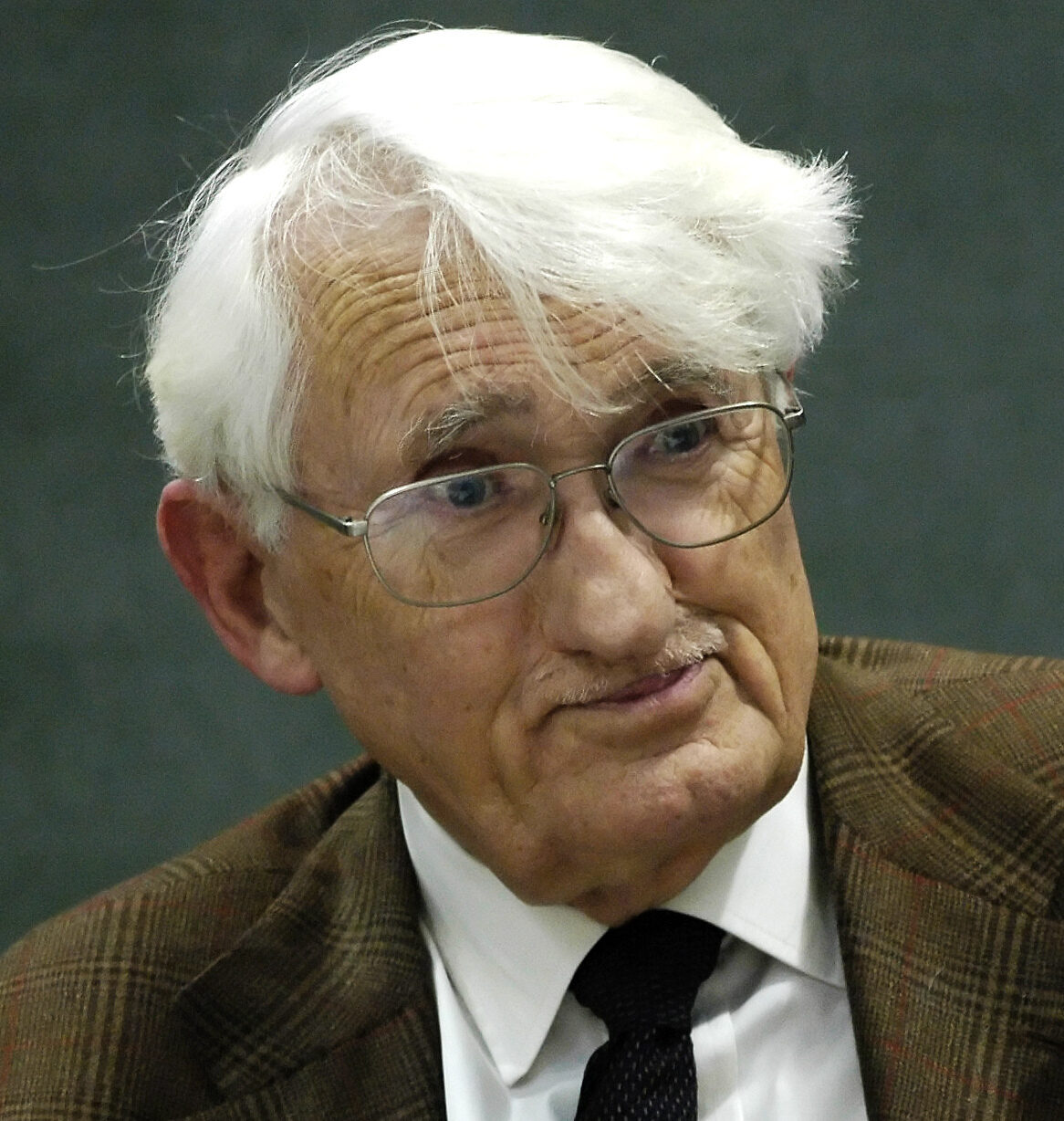
There are some news you never want to receive though you know that in the course of human life they will come. With Jürgen Habermas’s death, one of the last intellectual giants of the twentieth century has left us. It will be hard to think of Germany and Europe without his voice and his prose. His interventions in public debates at times scolded his contemporaries for their blindness and for their incapacity to draw out the hidden implications of their positions. Who else would have seen in the German Historians’ debate implicit reflections about post-war German identity and guilt and German responsibility for the Holocaust? Who else would have warned about the militaristic implications of the “Zeitenwende,” and the dangers of German military build-up in the name of helping Ukraine? Habermas was not afraid of irritating and even offending–but never intentionally.
Philosophers tend to be unworldly and we all know that the history of philosophy begins with the polis condemning to death Socrates who was the truth-sayer. This conflict between the illusions of the demos and the insights of the philosopher was given a new formulation by Immanuel Kant. Not only was the task of the philosopher, “sapere aude,” to think for oneself, but the task of critique was to think through the times in which one lived. With Kant and then with Hegel, temporality, that is a sense of the times in which one lived, entered philosophical consciousness. Habermas is the heir of this tradition, which in the work of the critical theory of Horkheimer and Adorno, became a radical critique of a society and culture which negated and frustrated emancipatory human potential. The task was to uncover this potential and anticipate possible future transformations.
The world has lost an intellectual giant, and many of us have lost a beloved teacher and a mentor. And I will say the Jewish prayers in his honor, “May his memory be a blessing.”
* * *
[Editor’s note: This is a slightly revised version of a piece which appeared in the Sueddeutsche Zeitung on March 14, 2026].